Every farmer who has given up on his field, every founder who has shelved her idea, every child who has stopped raising her hand in class — carries the same quiet injury: the belief that their mind is not enough to change their circumstance. It rarely looks like a diagnosis. It looks like silence in a meeting, a business plan left unfinished, a hand that used to go up in class and now stays down.
We call this an injury rather than a personality trait because it is treatable, and because it precedes almost every other kind of failure we are asked to fix. Give a defeated founder capital, and she will often find a reason not to use it. Give a discouraged farmer better seeds, and he may plant less of his land, not more. The block is rarely resources. It is belief — and belief lives in the mind, which is why the mind has to be the first thing we build, not the last thing we hope survives the process.
Why we say "infrastructure," not "wellbeing"
Wellbeing sounds optional, something you add once the real work is done. Infrastructure is not optional — it is the thing everything else is built on top of. A village without roads cannot move its harvest to market, no matter how good the harvest is. A person without a healed relationship to their own capability cannot move their ideas into the world, no matter how good the idea is. We treat mental health the same way we treat electricity or internet access in a Smart Village: as a precondition, not a perk.
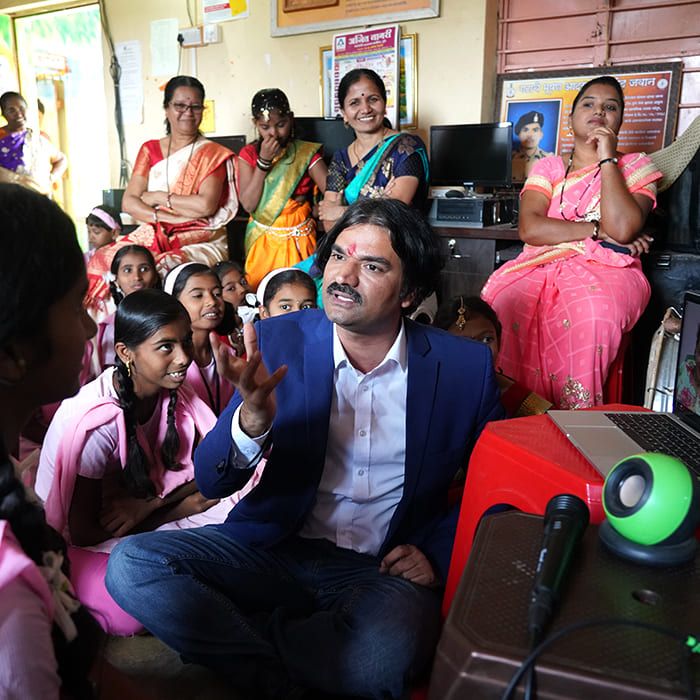
In practice, this means our incubation, training and community programs never start with the pitch deck or the seed catalogue. They start with a conversation about what the person believes is possible for themselves. Where that belief has been damaged — by repeated failure, by an unsupportive environment, by grief, by burnout — we now have a direct answer: our counselling services, built specifically for the people we work alongside, whether they are entrepreneurs, students, farmers or corporate teams.
This is not therapy-speak. It is a design choice.
We are careful here, because we are not a hospital and our counsellors are not a substitute for emergency psychiatric care. What we offer is a structured, constructivist form of support: a space where a person rebuilds their own belief in their capability, alongside someone trained to help them do that safely, rather than being told what to believe by a slide deck. That is the same principle behind our incubation model, applied to the mind instead of the business plan.